Where Chettinad cooking comes from, the freshly roasted spices that define it, from black pepper to stone flower, and what to order if you want to try it.
In the dry, red-earth country of southern Tamil Nadu, around the town of Karaikudi, there are villages full of vast old mansions. They were built by the Nattukottai Chettiars, a community of merchants and bankers who, in the 19th and early 20th centuries, traded across Burma, Malaya, Singapore and Ceylon. Their region is called Chettinad, and so is their cooking.
A trading kitchen
Chettinad food is known for being bold, aromatic and peppery. The Chettiars’ trading links across Southeast Asia are often credited with the unusually wide range of spices in their kitchens.
The spices
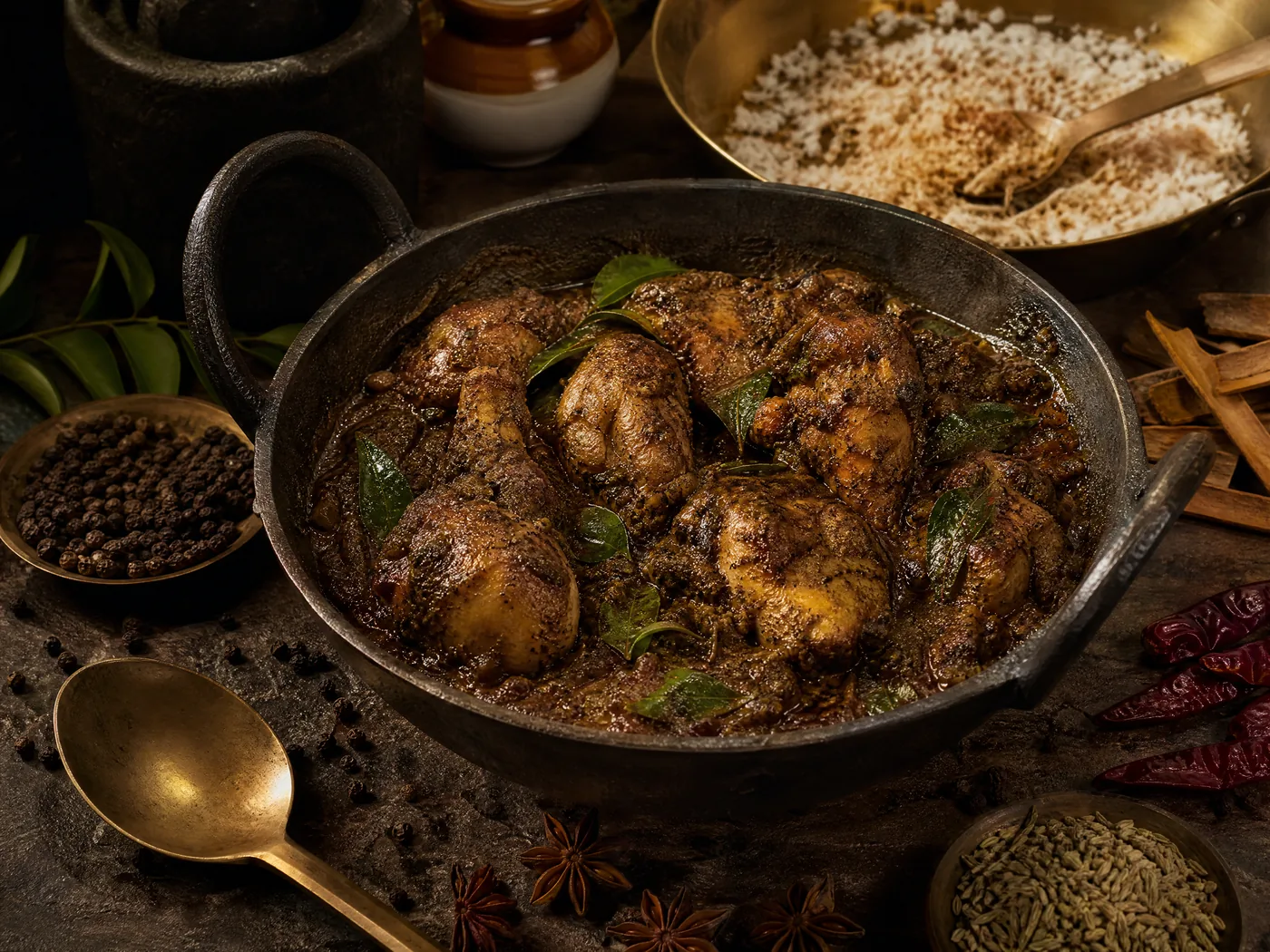
What defines Chettinad cooking is a masala of whole spices, dry-roasted and ground fresh for each dish:
- Black pepper, often the main source of heat
- Dried red chillies
- Fennel, cumin and coriander seeds
- Star anise, cinnamon and cloves
- Kalpasi (stone flower), a lichen with an earthy, smoky aroma
- Marathi mokku, the dried buds of the kapok tree, with a mustard-like bite
- Grated coconut, roasted with the spices in many dishes
Roasting brings out the oils and darkens the masala, which is why Chettinad curries are often deep brown rather than red or orange.
What to order
- Chicken Chettinad: the dish most people know, rich, dark and peppery.
- Lamb or goat Chettinad: the same masala with deeper meat.
- Mixed veg or paneer Chettinad: the vegetarian way in.
On weekends, look out for Chettinad mutton masala, Karaikudi mushroom curry and chicken sukka (Madurai style), a drier, roasted dish from the same part of Tamil Nadu.
How hot is it?
Chettinad food is usually one of the hotter styles on a menu, but its heat is warm and peppery rather than sharp. Rice, a cooling raita, or a lassi alongside help. Our spice levels guide has more.