Not all Indian food is hot. How to tell mild dishes from fiery ones, why Andhra food is famously spicy, and what to drink when the chilli gets to you.
“Indian food” and “spicy” are not the same thing. Indian cooks use many spices, but plenty of them, like cumin, coriander, cardamom and cinnamon, add fragrance rather than heat. Heat comes mostly from chillies, and how much a dish uses depends on the region and the recipe.
Mild: creamy and rich
Dishes built on cream, butter, yogurt, nuts or coconut are usually the gentlest:
- Korma, including our navarathan (vegetable) korma
- Butter chicken and paneer butter masala
- Malai kofta and murg malai kebab
Kashmiri chilli, used in many of these, gives a deep red colour with little heat.
Medium: most of the menu
Most North Indian curries, tikka masalas, kadai dishes, dal and biryanis sit in the middle: warm and well spiced, but not fiery.
Hot: Andhra, Chettinad and vindaloo
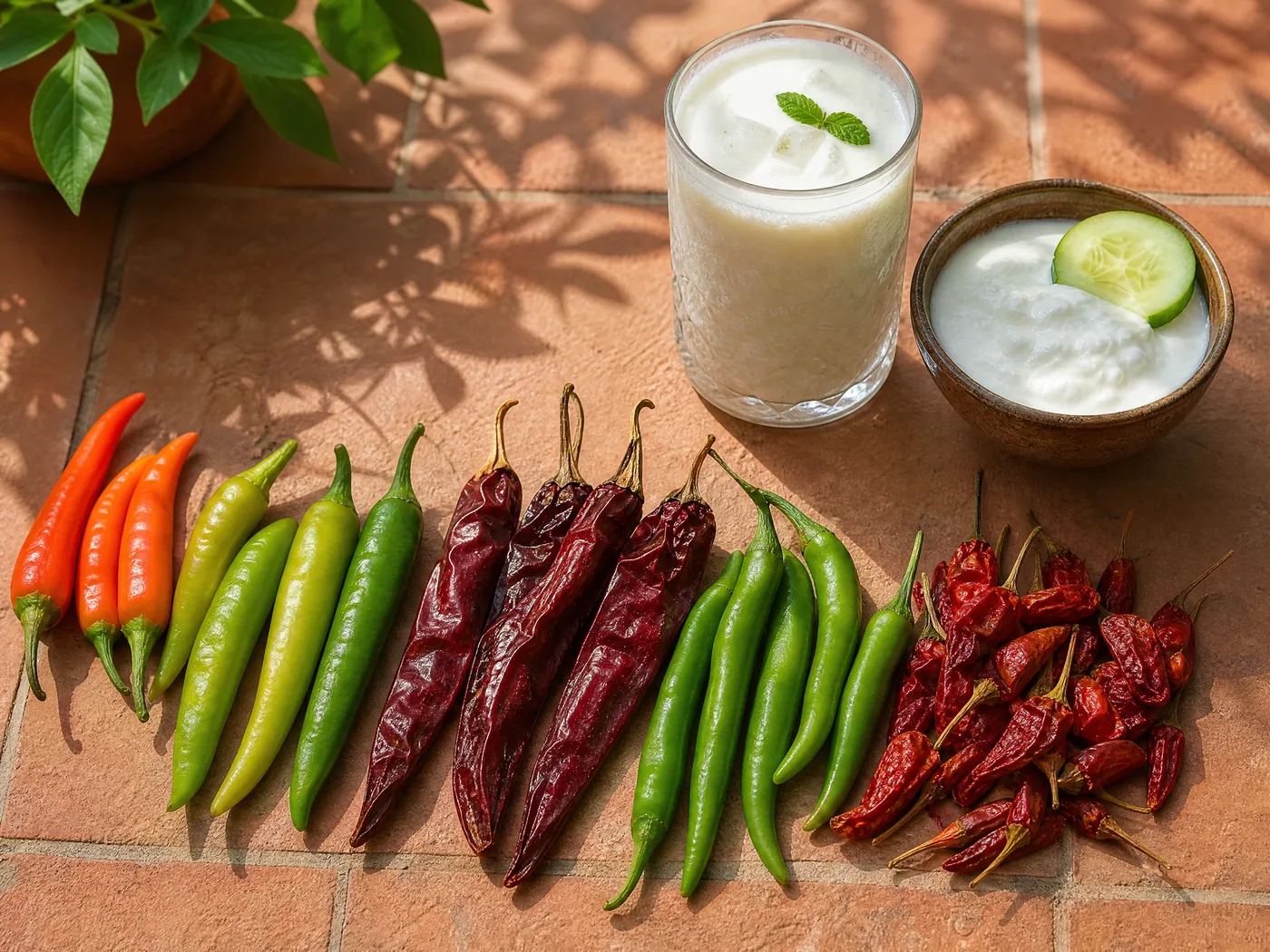
- Andhra dishes are famously hot. The Guntur region of Andhra Pradesh is one of the world’s great chilli-growing areas, and dishes like Andhra chicken curry, gongura curries and Andhra fried fish don’t hold back.
- Chettinad dishes from Tamil Nadu get their heat from black pepper and dried red chillies (see our Chettinad guide).
- Vindaloo, a Goan dish, is sharp with vinegar and usually one of the hottest curries on a menu.
- Green chilli dishes, like pachi mirchi chicken, are fresh and fierce.
If it’s too hot
- Drink dairy. Capsaicin, the compound that makes chillies hot, dissolves in fat, and milk proteins help wash it away. A sweet or salt lassi or a spoonful of raita works far better than water.
- Eat rice or bread. Plain rice, naan and roti absorb sauce and calm your mouth.
- Beer helps a little. Cold lager refreshes, but it won’t put out a fire the way yogurt does (more in our beer guide).
Ordering for a mixed table
Order one mild dish, one medium and one hot, with plenty of rice, bread and raita, and let everyone choose. If you’re unsure how hot a dish is, ask your server.